I. How to Use
When to Use
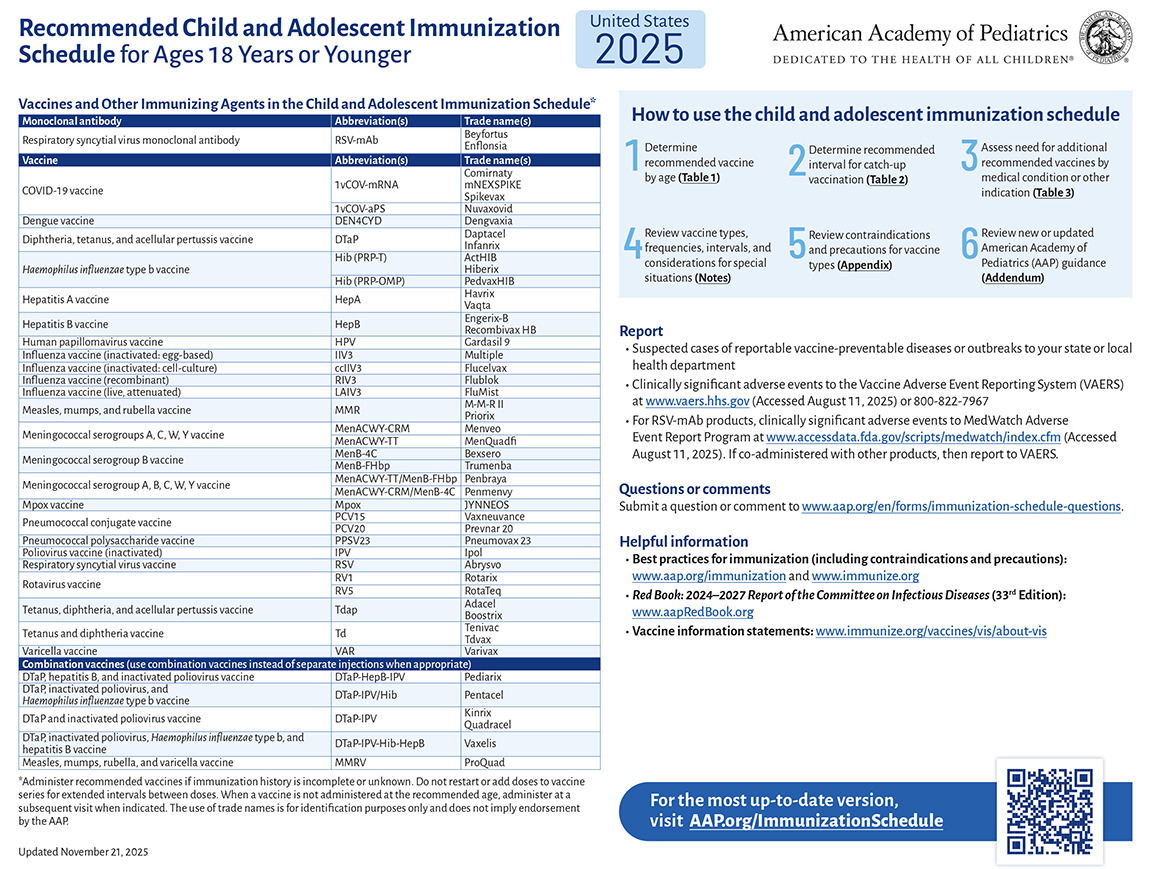
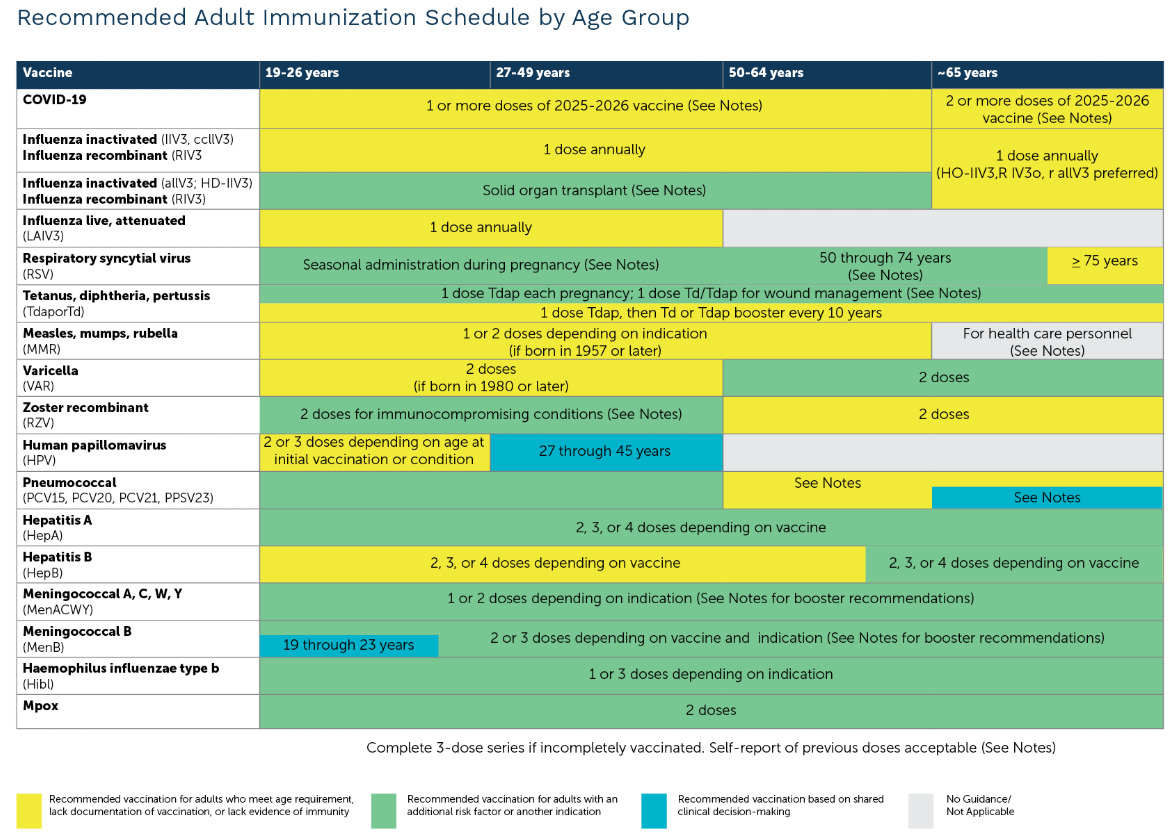
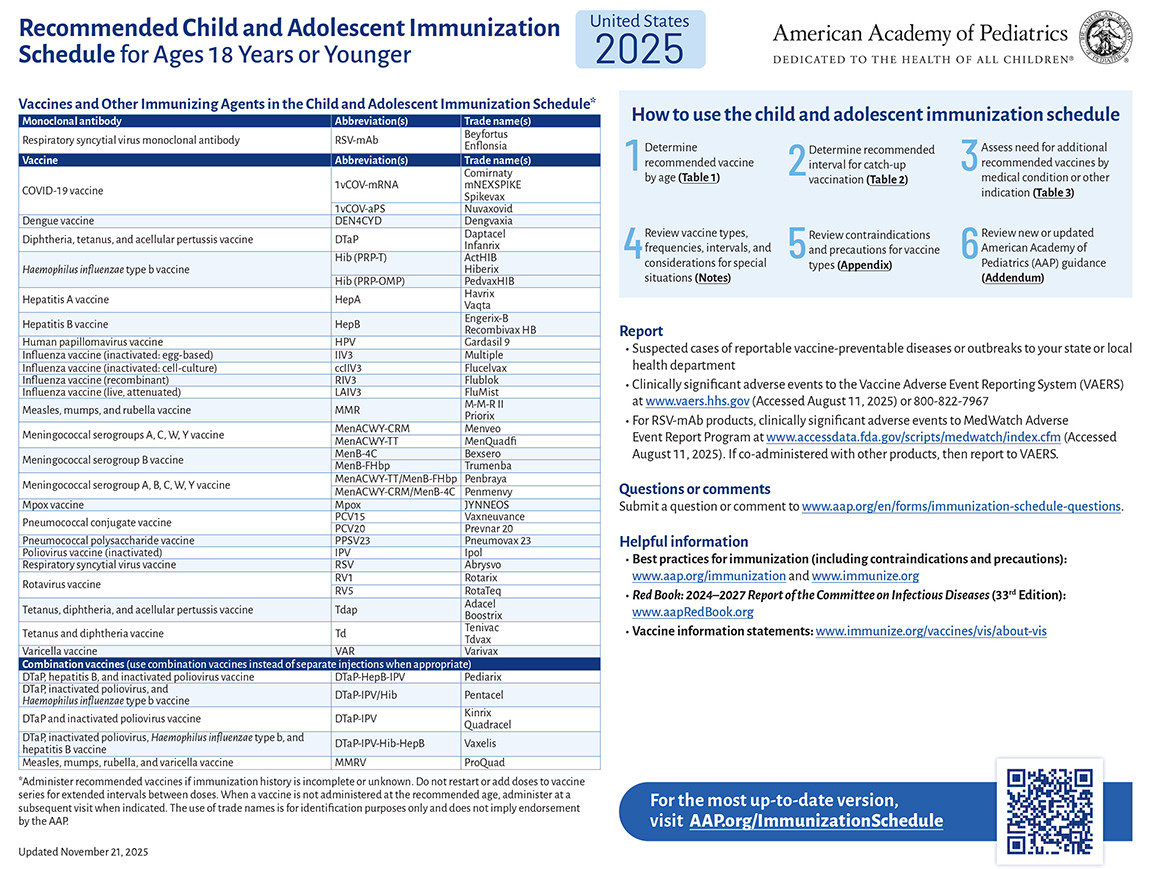
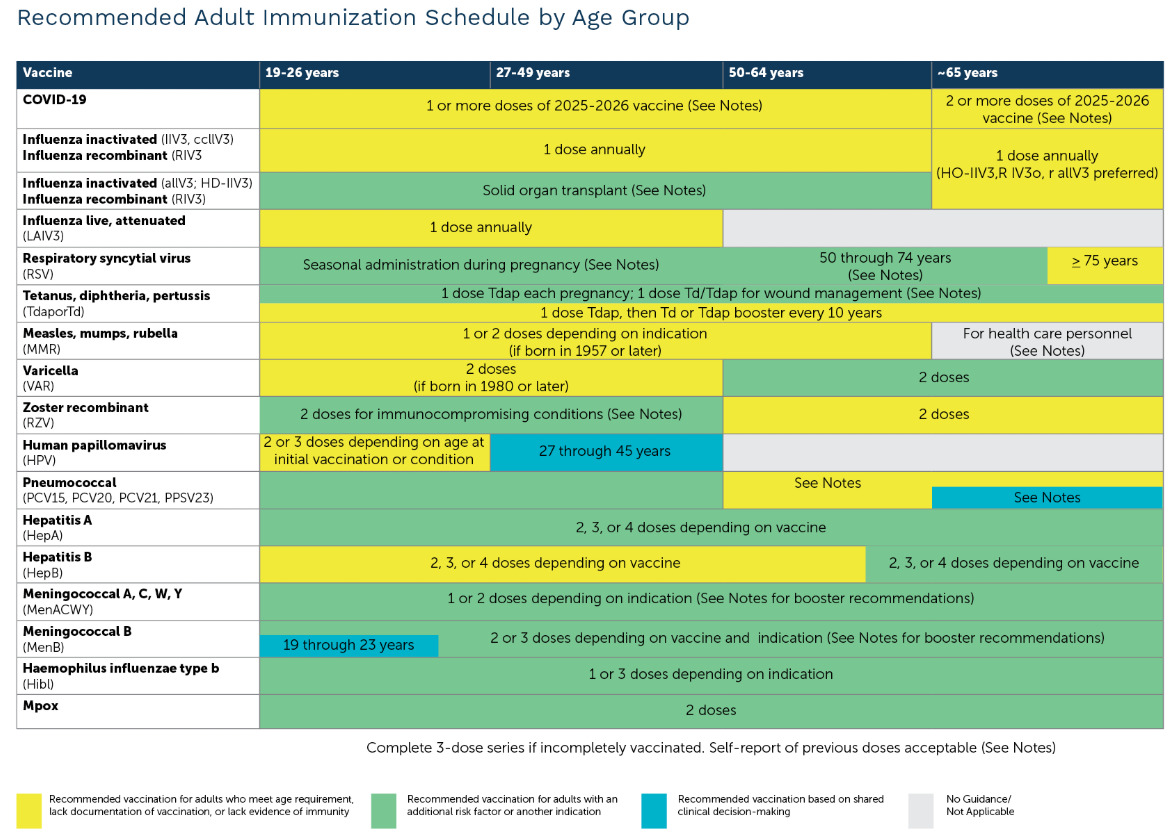
Use for pediatric and adult patients to determine recommended vaccinations by age.
Pearls / Pitfalls
-
This calculator is meant to provide a general schedule of vaccination doses. Clinical judgment and knowledge of past vaccination and the patient’s medical history should guide the decision to provide vaccinations to patients.
-
Be aware of appropriate interval dosing and catch-up schedules. Giving a vaccine prior to the appropriate interval may invalidate it and require revaccination.
-
Live vaccines are contraindicated in pregnancy and certain immunocompromising conditions*. If you are evaluating a patient who could be pregnant, ensure pregnancy is ruled out prior to administering a live vaccine.
- *One exclusion is HIV with CD4 > 15% and total CD4 count > 200/mm^3
Why Use
Vaccines are safe and effective in the prevention of various infectious diseases. Different vaccines are recommended for administration at different ages, and for many vaccines repeat dosing is required to renew and maintain adequate immunity.
II. Next Steps
Advice
-
Discuss vaccination and immunization safety with the patient, and have a full understanding of the patient’s history before administration.
-
Determine pregnancy status if administering a live vaccine. Live vaccines are contraindicated in pregnancy.
-
COVID-19 vaccination recommendations change frequently; consult the American Academy of Pediatrics or the American Academy of Family Physicians for the most up-to-date information.
-
It’s currently recommended that all patients 6 months of age and older receive a seasonally updated COVID vaccine, especially those who are high risk, older than 65, or who have never received a COVID vaccine.
-
Pneumococcal vaccination is now recommended for adults ages 50 and older.
-
There are many pneumococcal vaccine options including pneumococcal conjugate vaccines (PCV15, PCV20, and PCV21) and pneumococcal polysaccharide vaccine (PPSV23); follow evidence-based recommendations to ensure your patient receives the most appropriate vaccination based on their medical history.
Management
Recommend and administer immunizations based on these schedules.
Always take into account the immunizations a patient has already received in determining the need for repeat doses. If immunization history is not known, the AAP and AAFP offer guidance on when to provide catch-up or repeat doses.
High risk conditions may alter recommended vaccines. Consider the presence of HIV, cochlear implants, malignancy, sickle cell disease, and other conditions that may necessitate or obviate certain vaccines such as live vaccines.
Immunization counseling is an important part of care. Direct patients toward scientifically validated resources such as policy statements and patient-facing websites from the American Academy of Pediatrics or the American Academy of Family Physicians, for example.
“Delayed” or customized schedules are not recommended. The recommended vaccinations schedules are validated for both efficacy and safety.
Critical Actions
Live vaccines are contraindicated in pregnancy. The oral polio vaccine is not used in the US but is used elsewhere, and it is a live vaccine that therefore should not be used in pregnant patients. Live vaccines routinely used and licensed for use in the US include Varicella, intranasal influenza, MMR, and rotavirus. Other live vaccines may be available for specific populations (e.g. military personnel) and for travel.
Patients with immune compromising and other high risk conditions may have different vaccine schedules and recommendations. These may include children and adults with sickle cell disease, cochlear implants, and cancers. These guidelines are not listed in this calculator, and vaccination recommendations for these patients should be addressed collaboratively with their subspecialist teams or a travel medicine or infectious disease consultant.
III. Evidence
Evidence Appraisal
There has been extensive discourse and controversy over the safety of vaccines and their links to chronic illnesses including autism. The specific link between vaccines and autism, initially suggested by a paper that was subsequently retracted for falsified data, has been extensively debunked by decades of research on the topic. The consensus of professional organizations and the scientific community is that vaccines are safe, effective, and do not cause or increase the risk of autism. Additional research has shown that vaccines do not increase the risk of infection from diseases not targeted by vaccines (Glanz et al., 2018).
Formula
See tables
Facts & Figures
Literature
Original/Primary
https://publications.aap.org/redbook/resources/15585
Persistent link: https://aap.org/immunizationschedule
Recommended child and adolescent immunization schedule for ages 18 or younger. American Academy of Pediatrics, 2025.
https://www.aafp.org/dam/AAFP/documents/patient_care/immunizations/2025%20adult%20Schedule.pdf
Alternate link: https://www.guidelinecentral.com/guideline/4865972/
Recommended immunization schedule by age group - adults 19 and older. American Academy of Family Physicians, 2025.
Other References (including meta-analyses, CPGs, and impact analyses)
Vaccine safety: Examine the evidence. Healthychildren.org, American Academy of Pediatrics. Updated 11/20/2025
https://jamanetwork.com/journals/jama/fullarticle/2673970
Glanz JM, Newcomer SR, Daley MF, et al. Association Between Estimated Cumulative Vaccine Antigen Exposure Through the First 23 Months of Life and Non–Vaccine-Targeted Infections From 24 Through 47 Months of Age. JAMA. 2018;319(9):906–913. doi:10.1001/jama.2018.0708